Common Mistakes When Building a Wildlife Pond (and How to Avoid Them)
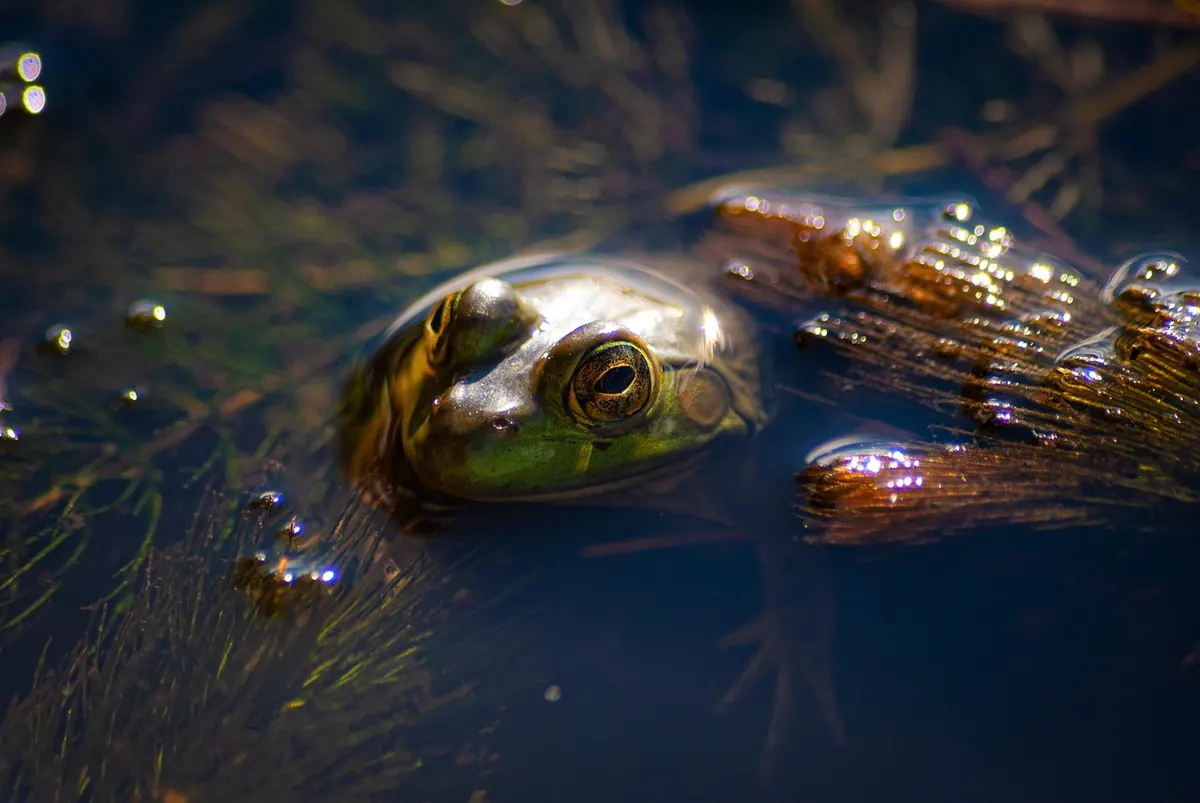
A pond is the most generous thing most of us can add to a garden. Give it half a chance and it fills with life: frogspawn in March, newts hunting at dusk, dragonflies patrolling in July, blackbirds bathing at the edge.
Plenty of ponds, though, sit there for years looking neat and supporting almost nothing. The cause is rarely bad luck. It is usually one of a handful of familiar mistakes — sheer sides, a few goldfish, the wrong plants, an over-tidy autumn. None is hard to put right, and most are far cheaper to avoid while you are still holding a spade.
Steep sides with no way out
A hole with vertical walls and a bare liner is a trap, not a habitat. Frogs and newts can usually climb out, but hedgehogs, fledgling birds and beetles drown in ponds they cannot escape. Steep sides also leave no shelf for marginal plants, so the water has no natural fringe.
Fixes, roughly in order of helpfulness:
- Build in a beach. Fold the liner at one end into a shallow slope that runs from dry ground into 5–10 cm of water, then cover it with soil, gravel or flat stones.
- Leave a planting shelf. A 20–30 cm deep ledge around part of the edge is enough for most marginals.
- Add an escape route. A half-submerged log, a rough stone stack or a piece of pond matting draped over the side will do.
- Keep the water close to the rim. If the surface sits 15 cm below the surrounding soil, even a good ramp will not help.
If the pond is already built, you need not drain it. Lay a sturdy log or a gently sloping plank into the water, weight it down, and let marginal plants grow over the liner edge. It is a bodge, but it saves lives.
Putting fish in
Fish are the quickest way to empty a wildlife pond. Even a few goldfish or sticklebacks will graze through tadpoles, newt eggs and damselfly larvae, and their rooting about keeps the water cloudy and the plants thin. A pond with fish can still be pleasant, but it will not be a wildlife pond, and no amount of planting will change that.
If you want fish, keep them in a separate container or a second, deeper pond. And never move fish, spawn or pond plants from another pond into yours: disease and invasive species travel that way.
Planting invasive or thuggish species
Several plants sold for garden ponds are seriously invasive in the UK. Australian swamp stonecrop, floating pennywort, water fern and parrot's feather can smother a pond in a season and are very hard to remove. Some are banned from sale, and it is an offence to let them spread into the wild. Check the label before buying, and if you find one in your pond, remove it carefully, bag it and bin it rather than composting it or tipping it into a ditch.
Native plants can be thuggish too. Bulrush and yellow flag iris will take over a small pond, and duckweed can blanket the surface in a warm summer. Better choices:
- Marginals: water forget-me-not, marsh marigold, water mint, lesser spearwort.
- Submerged: hornwort, water starwort, water crowfoot.
- Floating: frogbit, or a native water lily in a large pond.
Blanket weed is a symptom rather than a plant. It thrives on sunlight and nutrients, so shade the surface with plants and keep fertiliser out of the water and it usually settles down.
Planting that never gets going
The commonest planting mistakes are simple. People plant only the middle. They use ordinary potting compost, which releases nutrients and feeds algae. They choose baskets too small to survive a hot day. They leave half the liner exposed.
Cover three zones
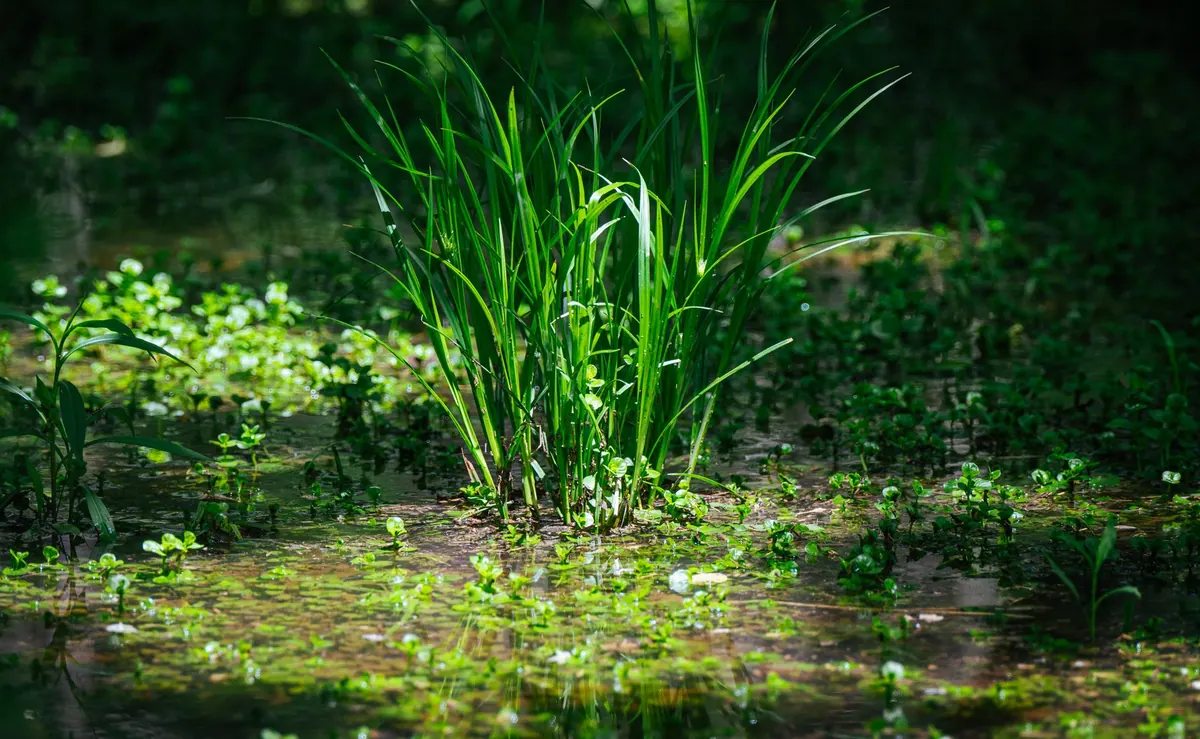
A good pond has marginals in the shallows, submerged plants across the floor and something floating on the surface. Aim for leaves over roughly a third to a half of the surface by midsummer: enough to shade the water without choking it.
Plant into the right medium
Use aquatic compost or plain loam, with no fertiliser. Hessian-lined baskets or planted gravel pockets work well, and a gravel topping keeps soil in place when newts and fish stir things up. Plant generously in the first year, then let the pond find its own balance.
Water, nutrients and the garden around it
Fill the pond with rainwater, and top it up the same way. Tap water is better than nothing in a drought, but it carries nutrients and chlorine, and repeated top-ups feed the algae you are trying to discourage.
Then look at what drains in. Lawn fertiliser, weedkiller and runoff from a gravel drive all end up in the water. Leave a rough edge of long grass, a log pile and some leaf litter within a few metres of the bank, because amphibians need damp cover on land as much as they need the pond itself.
Over-tidying, and the wrong kind of maintenance
Autumn is when well-meaning pond owners do the most damage. Cutting back every stem and clearing every leaf removes the hollow stalks that invertebrates overwinter in and the litter that frogs burrow into. Skim leaves off the water, since they rot and deoxygenate it, but leave the marginal stems standing until late spring and put the leaves on a heap nearby rather than in the bin.
Never empty and scrub a pond. Silt is habitat. If it builds up, clear it in stages in late summer or early autumn rather than in spring when amphibians are breeding, and leave the dredged silt on the bank for a day or two so that everything living in it can crawl back.
A pump is optional. If you use one, guard the intake so tadpoles and newts are not drawn in.
A pond that keeps on giving
Get these things right and you can then do very little. A pond with gentle slopes, plenty of shallows, native plants, rainwater and no fish will be colonised on its own; water beetles and pond skaters often arrive within weeks, and amphibians usually find a new pond within a year or two.
If the first summer looks disappointing, leave it alone. New ponds are often green and empty while they settle. Add a little more marginal cover, resist the urge to stock it, and by the second or third year you should be watching dragonflies hunt over water you can barely see for plants. If your pond sits next to a stream, ditch or protected site, ask your local wildlife trust for advice before you dig or plant.
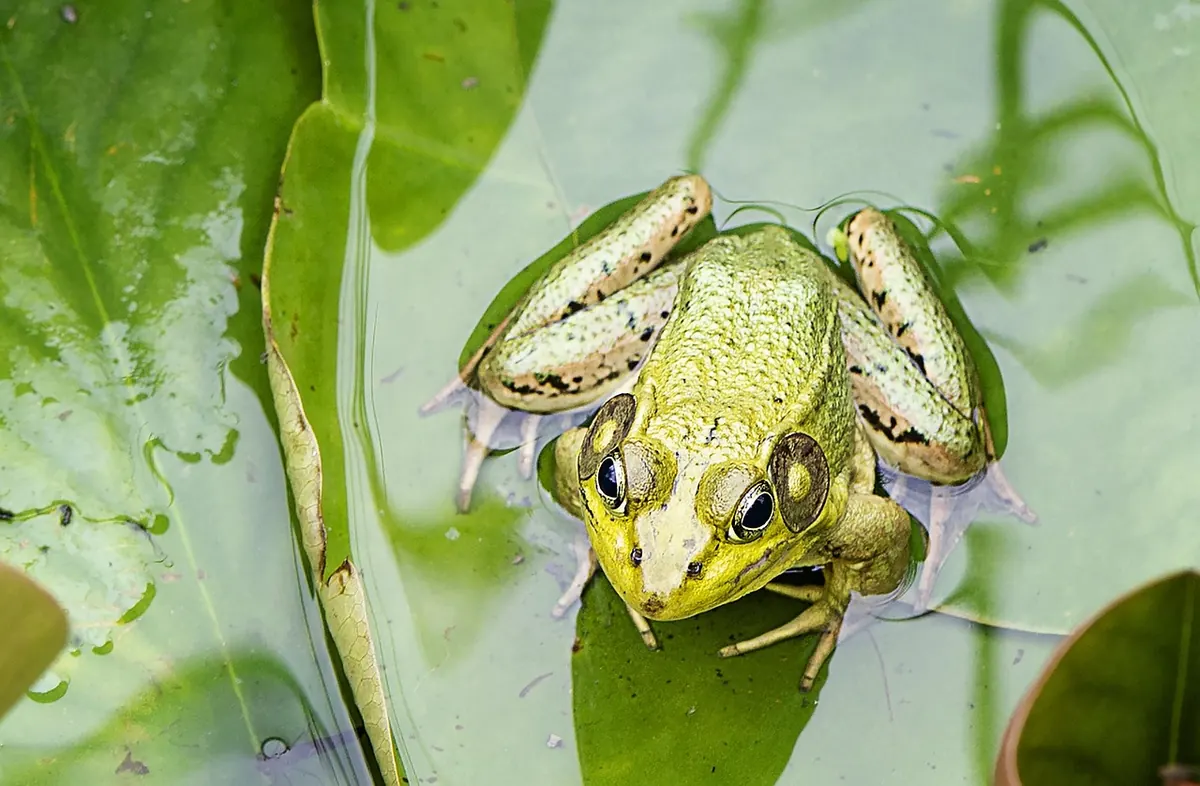
Photo: stanbalik / Pixabay